
The Architect's Renaissance: How New AI Models Elevate the True Orchestrators
The modern architect doesn't build bricks—they build intelligence.
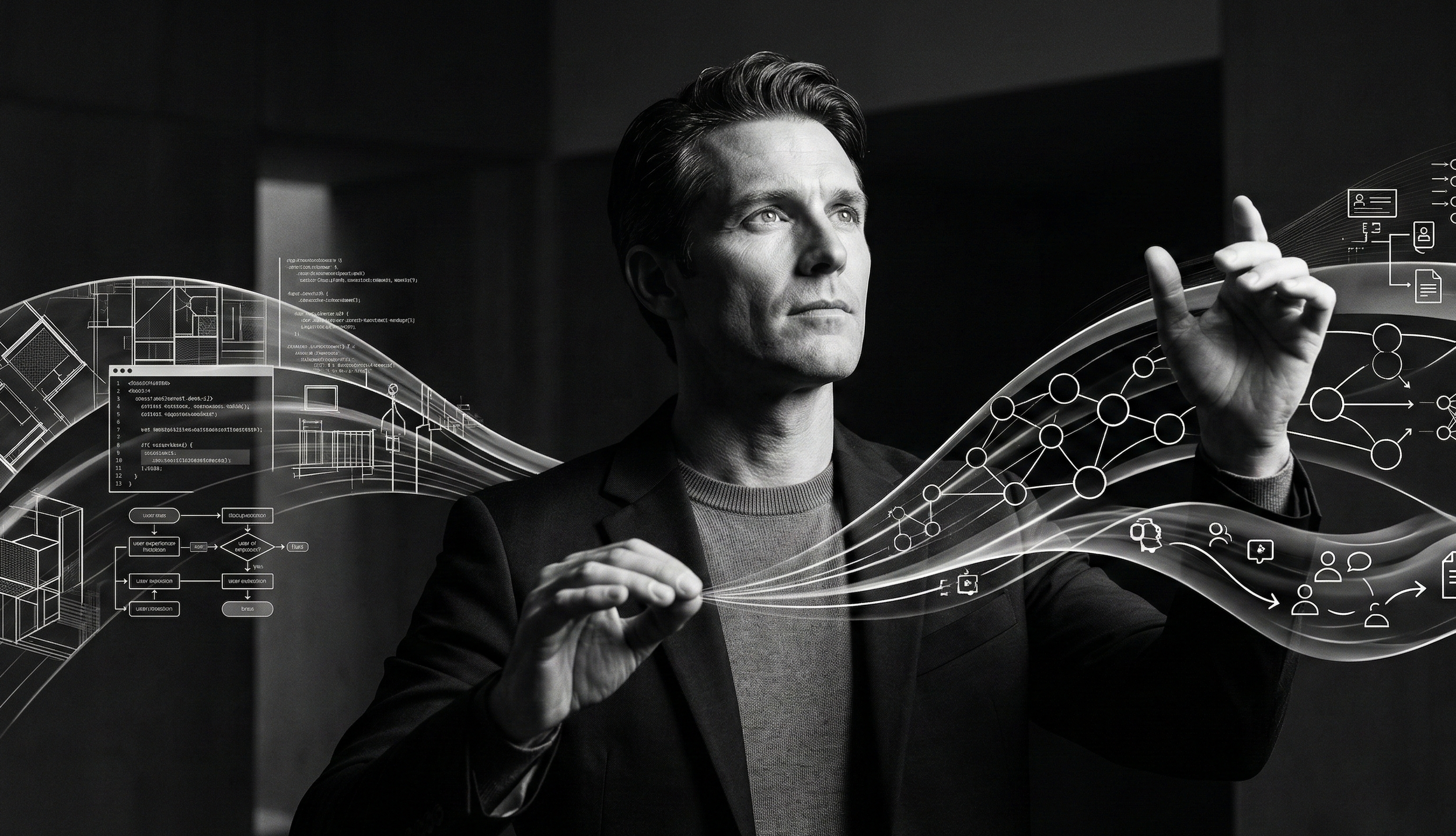
The Shift: From Builder to Conductor
For decades, software architects sat at an uncomfortable crossroads. They were expected to design magnificent cathedrals of code while simultaneously laying every brick. The title of "architect" carried prestige, but the reality often meant drowning in implementation details, debugging obscure edge cases, and wrestling with boilerplate code that consumed 80% of their cognitive bandwidth.
The new generation of AI models changes everything.
We're witnessing a fundamental rebalancing of what it means to be an architect. No longer constrained by the tyranny of syntax and routine implementation, architects are emerging as genuine orchestrators systems thinkers who design at the level of intent, strategy, and human experience rather than method signatures and dependency graphs.
The Liberation from Trivia
Consider the daily reality of a software architect before this transformation:
- Hours spent writing CRUD operations that follow the same pattern for the thousandth time
- Mental energy drained reviewing pull requests for style guide violations
- Creativity smothered under the weight of boilerplate configuration and repetitive testing frameworks
- Strategic vision compromised by the immediate demands of "just making it work"

New AI models whether coding assistants, design generators, or testing automata absorb this trivia. They don't replace architects; they elevate them. When Claude, GPT, or Gemini can generate a complete API endpoint in seconds, complete with error handling, input validation, and comprehensive tests, the architect is freed to ask the questions that actually matter:
- Should this API exist?
- What experience are we creating for the developer who calls it?
- How does this fit into our broader system philosophy?
- What are the second and third-order implications of this design choice?
Orchestration: The New Core Competency
The word "orchestrator" carries weight. An orchestra conductor doesn't play every instrument—they understand them all deeply enough to blend them into something greater than the sum of parts. They interpret the composer's vision, shape the emotional arc, and ensure every section serves the whole.
Today's architects are becoming exactly that.
Modern AI tools function as the orchestra sections:
- Code generation models as the string section producing the harmonic foundation
- Design systems, like the brass, bring bold, declarative statements
- Testing frameworks are like the percussion, maintaining rhythm and catching errors
- Documentation generators are like the woodwinds carrying melody and meaning
The architect doesn't play these instruments. They conduct them, shaping timing, emphasis, and interpretation to achieve a cohesive vision.
The Multiplication of Impact
Here's what this transformation looks like in practice:
A senior architect at a fintech startup used to spend three weeks designing and implementing a new microservice. Two weeks were pure boilerplate: authentication middleware, database connections, logging infrastructure, basic CRUD endpoints. One week was actually interesting: domain modeling, business logic design, integration patterns.
With AI assistance, those two weeks of boilerplate compress to two days. The architect reviews, refines, and directs but the implementation flows through their guidance rather than their fingers.
But here's the critical insight: they don't simply gain two weeks. They don't use that time to implement five more microservices. Instead, they zoom out. They redesign the service mesh topology. They evaluate whether microservices are even appropriate. They research emerging patterns in event sourcing. They mentor junior developers on system thinking rather than syntax.
The impact multiplies not through doing more, but through thinking better.

The Cognitive Elevation
Architectural thinking operates at multiple levels simultaneously:
- Tactical: Does this code work? Is it performant? Is it secure?
- Operational: How does this deploy? How do we monitor it? What fails first?
- Strategic: Does this serve our business goals? Will it scale with our growth?
- Philosophical: What kind of system are we building? What values does it embody?
Traditional development forced architects to allocate 70% of their mental budget to tactical concerns simply because those concerns demanded immediate attention. AI assistance inverts this ratio. When tactical implementation becomes a dialogue rather than a solo marathon, architects can allocate cognitive resources to strategic and philosophical questions.
This is where genuine architectural value emerges. Anyone can make code work. Few can make code meaningful.
The Human-Centered Turn
Perhaps the most profound shift is human rather than technical.
When architects are no longer bottlenecked by typing speed or API memorization, they become accessible. They participate in stakeholder conversations without the anxiety of undone implementation work hanging over them. They prototype ideas in real-time during meetings, rendering concepts tangible rather than theoretical.

The architect as orchestrator becomes a translator between business and technology, between present constraints and future possibilities, between diverse stakeholder needs and cohesive system design.
This accessibility transforms organizational dynamics. Architecture ceases to be a mysterious priesthood hidden behind Jira boards and technical debt backlogs. It becomes a collaborative practice, visible and participatory.
The Risks of Elevation
We should be clear-eyed about challenges:
- Skill atrophy is real: When you don't regularly implement, certain muscles weaken. The architect-orchestrator must intentionally maintain technical depth through code review, system modeling, and hands-on experimentation, just as a conductor regularly practices piano to maintain harmonic intuition.
- AI isn't infallible: Generated code can be subtly wrong, architecturally naive, or dangerously insecure. The orchestrator's role includes critical evaluation, pattern recognition, and the wisdom to say "this generated solution misses something important."
- Coordination complexity multiplies: Conducting ten AI tools requires different skills than writing code solo. Architects must develop new literacies: prompt engineering, model selection, output verification, and the meta-skill of knowing when AI assistance helps versus hinders.
The Future of Architectural Practice
We're entering an era where the distinction between "architect" and "senior developer" becomes less about years of experience or title hierarchy, and more about cognitive posture.
Architects think in systems. They trade certainty for clarity, making decisions with incomplete information while maintaining a coherent vision. They navigate ambiguity, balancing competing constraints without paralysis.
AI models amplify these capabilities. They don't replace judgment—they extend it. They don't eliminate complexity—they surface it for human consideration at higher levels of abstraction.

The architects who thrive will be those who embrace orchestration early. They'll develop new vocabularies for directing AI systems. They'll cultivate taste and the ability to recognize superior design even when they didn't create it personally. They'll become curators of intelligence, blending human insight with machine capability.
Conclusion: The Architect's True Calling
Architecture was never about the code. It was always about creating coherent systems that serve human needs reliably, elegantly, and sustainably.
New AI models finally allow architects to inhabit this truth. They strip away the scaffolding that obscures the real work: understanding problems deeply, envisioning solutions imaginatively, and orchestrating the construction of systems that matter.
The architect as orchestrator isn't a diminished role—it's the role as it was always meant to be. The builder had to lay bricks. The conductor makes music.
Welcome to the Renaissance.
Written for architects navigating the AI transition. The future belongs to orchestrators.