
Voice vs. Chat: Which Conversational Agent Wins the Engagement War?
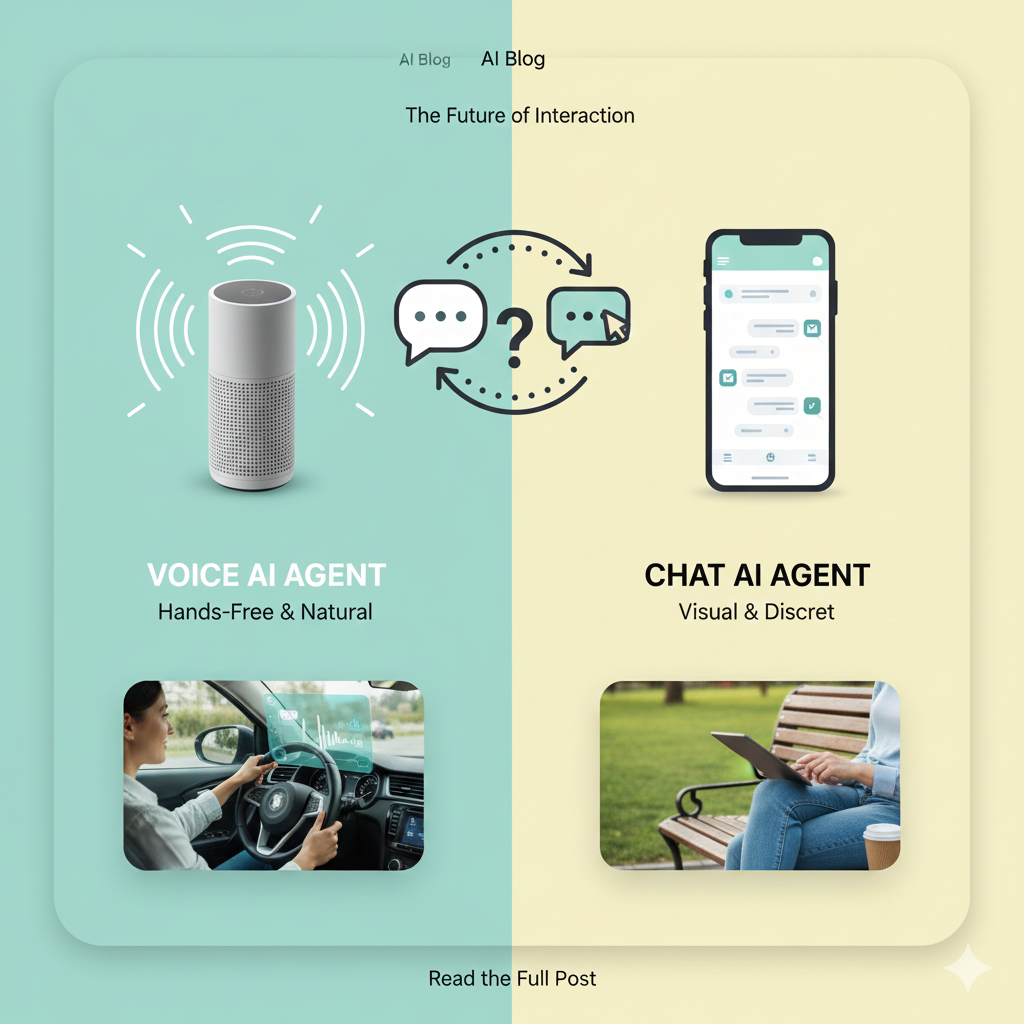
🗣️ Voice vs. Chat: Which Conversational Agent Wins the Engagement War? 💬
In today's digital landscape, businesses rely on conversational agents—both voice-activated and text-based—to handle everything from customer service to sales. But when you're deciding how to build your next AI interface, which one should you choose?
Understanding the strengths and weaknesses of voice and chat is crucial for maximizing user satisfaction and operational efficiency. Let's break down the pros and cons of both types of conversational agents.
🗣️ Voice Conversational Agents: The Power of Speech
Voice agents, like those powering smart speakers or automated phone systems, offer a dynamic, hands-free experience.
The Upside: Why We Love to Talk
- Convenience and Freedom: The biggest win is the hands-free nature. Whether you're driving, cooking, or multitasking, you can access information and services simply by speaking.
- Speed and Efficiency: For most users, speaking is significantly faster than typing, especially when conveying long or complex requests.
- Natural Interaction: Voice conversations can feel more fluid and natural, often leading to a higher-value, more human-like service experience.
- Accessibility Champion: Voice interfaces are vital for users with visual impairments or mobility issues, providing an inclusive way to interact with technology.
The Downside: When Silence Is Golden
- The Noise Problem: Background noise—from traffic to a busy office—can dramatically reduce the accuracy of the agent's understanding.
- Lack of Privacy: Since you have to speak out loud, voice agents are not suitable for public or shared environments (like libraries or open-plan offices).
- Implementation Complexity: Developing a truly effective voice agent requires sophisticated technology for Automatic Speech Recognition (ASR) and natural Text-to-Speech (TTS), which can increase setup costs.
💬 Chat-Only Agents: The Dominance of Text
Text-based agents, commonly known as chatbots, live on websites, messaging apps, and business platforms.
The Upside: The Power of the Screen
- Discreet and Private: You can chat privately anywhere, making it the preferred choice for public transport or workplaces.
- Visual Communication is Key: Chat agents excel at sharing visuals—links, product images, graphs, documents, and step-by-step instructions—which are vital for commerce and support.
- User Control and Reference: Users can engage at their own pace, easily re-read previous messages, and copy/paste important information for later use.
- Easy Integration: Text-based bots are generally faster and cheaper to deploy, integrating seamlessly into existing digital channels.
The Downside: The Limitations of Typing
- Requires Manual Effort: You are always tethered to a device, requiring manual input and interrupting other tasks.
- Slow for Detailed Queries: Typing can be laborious for users who need to provide extensive details or descriptions.
- Lack of Nuance: Text alone makes it difficult for the agent to infer emotional state or urgency, which can lead to frustrating, one-size-fits-all responses.
The Verdict: Choosing Your Agent
There is no single "winner." The best agent is the one that meets the user's needs in the right context:
| Use Case | Recommended Agent | Rationale |
|---|---|---|
| Driving/Cooking | Voice | Requires hands-free operation and high convenience. |
| Shopping for Products | Chat | Needs visual aids (images, links, comparisons). |
| Simple FAQ Lookup | Chat | Quick, discreet, and transactional. |
| Complex Technical Support | Voice (Often paired with human) | Requires quick, detailed back-and-forth and high empathy/nuance. |
By aligning your agent type with your users' specific environment and goals, you can build a conversational interface that is truly effective and engaging.